The best equipment for pros and enthusiasts alike









 Professions
Summary:
An explosion is characterized by the presence of a fuel mixed with an oxidizer, in given proportions, which in the presence of a heat source or ignition, will burn very rapidly.
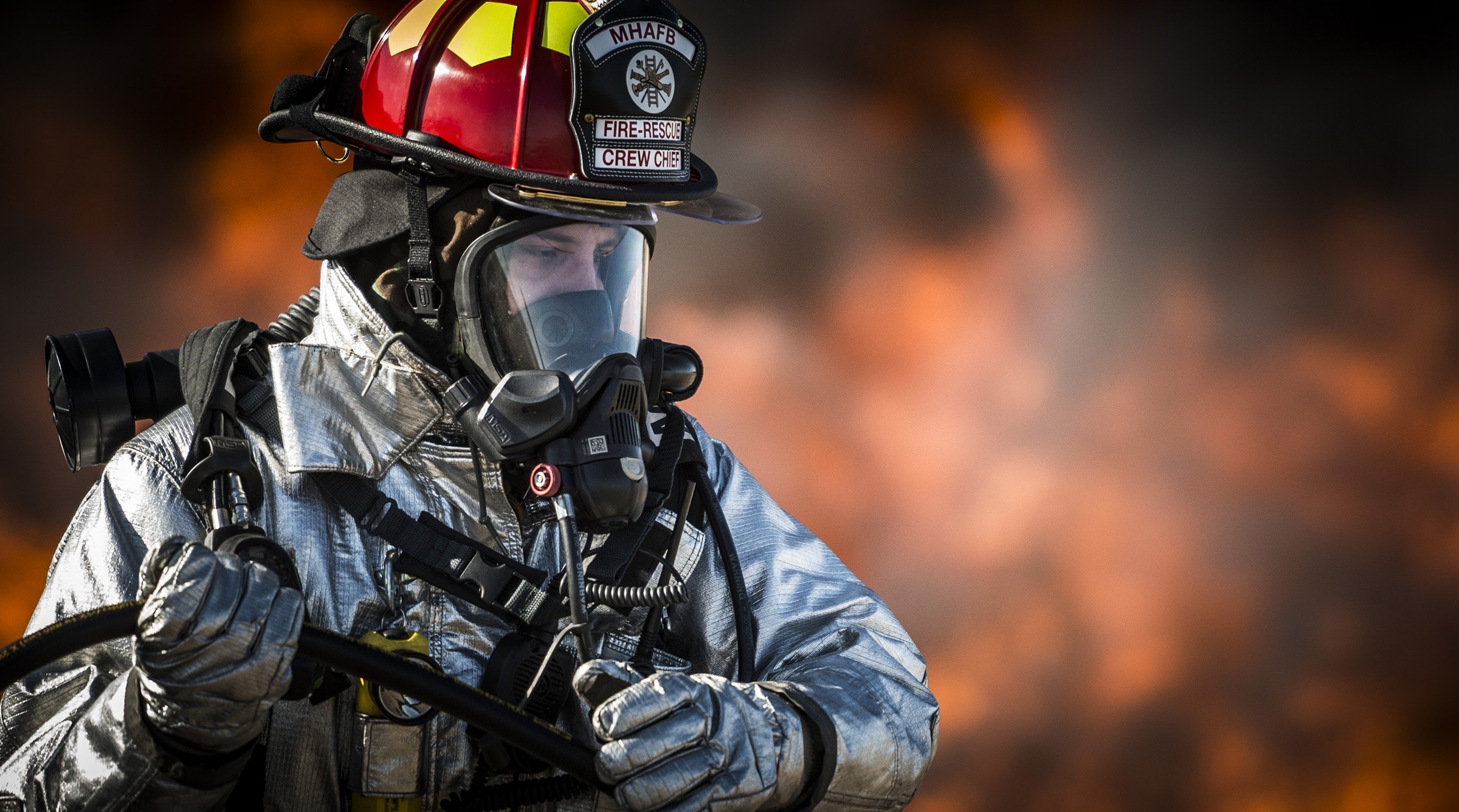
In order not to be exposed to this type of reaction, firefighters are equipped with this tool essential to their safety during interventions: the explosimeter or multi-gas detector.
This device measures the presence of explosive gases or combustible vapors in the air (such as natural gas, butane, propane, hydrocarbons, solvents or alcohols) before the mixture becomes explosive. The explosion risk is evaluated based on the LEL (Lower Explosive Limit) and the UEL (Upper Explosive Limit). These are limits beyond which the gas concentration in the air is sufficiently low or high not to cause a reaction.

The majority of devices in service are catalytic oxidation explosimeters. They give a measurement of the concentration of a flammable gas between 0 and 100% of the LEL.
Multi-gas detectors are calibrated on a reference gas, having specific explosive limits. To know the value of another gas than the calibration one, there are conversion curves.
It is important to know that each detector model has its own curves.
Let's take the example of an explosimeter calibrated on pentane.
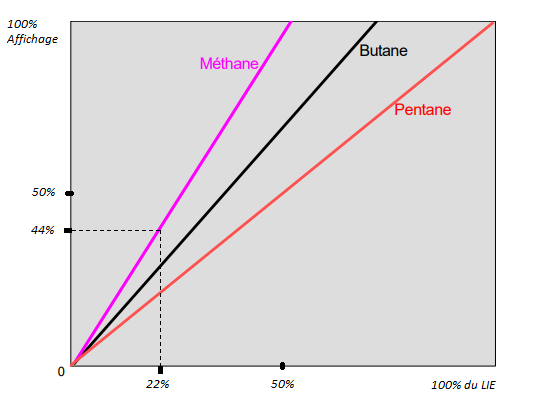
In this case, when measuring pentane and the device displays 100%, we are at 100% of the LEL of Pentane. For the same type of explosimeter, when measuring methane, if the device displays 44%, the LEL of methane is 22%. To know the methane portion on this explosimeter calibrated on pentane, the formula is as follows: Displayed value x 0.5.
To use an explosimeter, you must perform a zero measurement in a safe area and not in the presence of a flammable gas. This step is crucial, as it can then lead to negative values and an underestimation of the risk.
Furthermore, other factors are likely to influence the operation of the explosimeter and lead to erroneous responses:
- Ambient humidity
- Electromagnetic waves
- High or very low temperatures
- Silicone, lead or sulfur-based substances
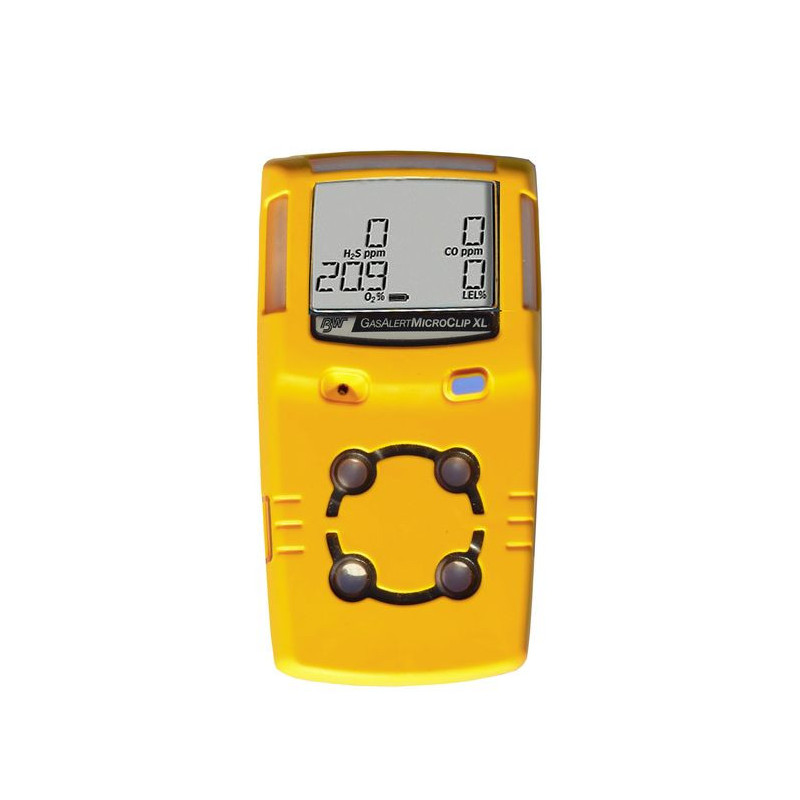
Finally, the explosimeter does not detect the explosive risk related to dust, it's even the opposite, as these clog the device's filter. A dust explosion can occur when the five elements of the explosion pentagon are present (an oxidizer, a heat source, a fuel, dust dispersion, all in a closed space). Most dusts are of organic origin such as cereals, flour, wood, etc.
During an explosion of this type, the first explosion or primary explosion stirs up combustible wood dust accumulated on surrounding surfaces. When this dust ignites, it is a secondary explosion. Due to the larger amount of dust, the secondary explosion is often more powerful than the primary one.
On vetsecurite.com, find thousands of items for firefighters : clothing, shoes, equipment, materials, luggage as well as a women's range.