The best equipment for pros and enthusiasts alike









 Professions
In France as elsewhere, there are numerous professions related to laboratory analysis and biotechnology. Depending on their specificities, these professions may have more or less direct links with the industrial chemical, pharmaceutical, food processing sectors or with the medical field.
Table of contents:
Laboratory technicians and medical analysis technicians or biomedical technicians are responsible for performing different types of examinations and samples prescribed by a doctor or pharmacist. They then analyze them with the aim of highlighting an anomaly and confirming or refuting a diagnosis, under the responsibility of a biologist or a laboratory chief. Only the latter is qualified to interpret the analysis results. Laboratory technicians work in hospitals, clinics, or private medical analysis laboratories, as well as in research institutes or transfusion centers. They must master analysis tools and provide a precise report of the results obtained.

Under the authority of an engineer, researcher, or pharmacist, the chemical technician or biochemist is qualified to perform experiments in the laboratory and carry out dosages. They must again record all their results with precision and can operate in a control laboratory as well as in a manufacturing laboratory, or a research and development laboratory, or even in an industrial production workshop. The particularities of their profession can lead them to work not only in the chemical and pharmaceutical industry, but also in food processing, cosmetics, metallurgy, automotive, aerospace, etc. In the field of industry, a manufacturing control laboratory technician is there to perform analyses to evaluate product quality in compliance with regulations and hygiene and safety standards.

Laboratory managers, also called analysis managers, are responsible for distributing tasks within teams while ensuring compliance with requirements (deadlines, costs, etc.). They ensure the management and control of equipment, enforce hygiene and safety measures, and also handle administrative matters. The laboratory manager must be distinguished from the quality manager who ensures traceability and product quality, communicates about hygiene and safety measures, and writes operating procedures. The latter is assisted by a quality service coordinator.
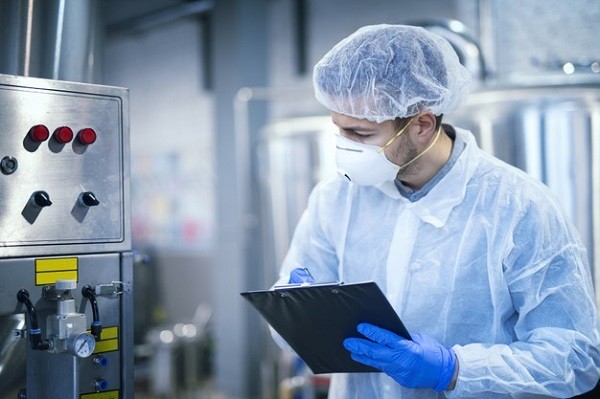
Finally, metrology technicians are not directly confronted with patients. Their mission is to ensure the proper functioning of devices and machines used by meticulously controlling their settings. They must also verify the functional compliance of the work environment.
All these laboratory professionals are required to use high-precision equipment and must imperatively demonstrate rigor and meticulousness given their responsibilities. They are also regularly exposed to chemical substances or products that may present risks, such as contaminated samples. This is why they must wear perfectly adapted equipment and work attire, and be well-versed in the regulations applied in their specific field.
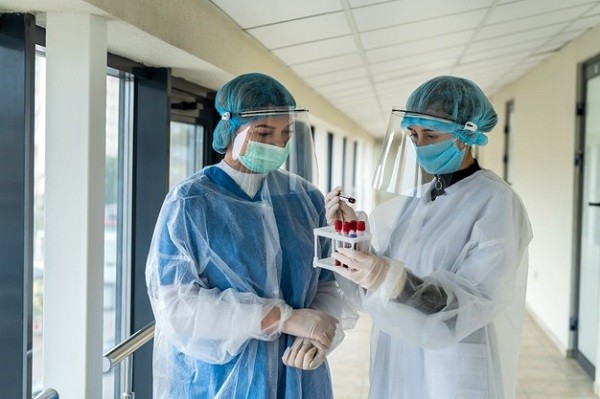
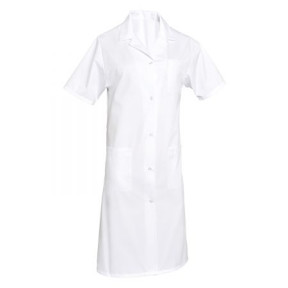
Laboratory technicians have in common the wearing of a work coat, generally blue or white in color. Brands like SNV Pro have specialized in this type of equipment and offer both short-sleeved white coats and long-sleeved blue coats with snap buttons. Depending on their field of specialty, laboratory professionals may also be required to wear personal protective equipment (PPE) such as safety glasses. There are all kinds: visors and anti-UV safety glasses meeting EN 166 and EN 170 standards, X-Fit Pro glasses resistant to scratches and chemical products, or Lite Safety PW14 work glasses with anti-fog coating.
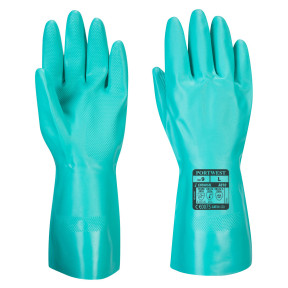
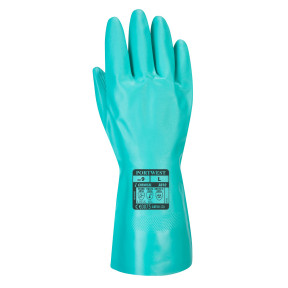
Regarding protective gloves, we particularly recommend Nitrosafe gloves resistant to contact with chemical products such as methanol, sulfuric acid, nitric acid, or ammonia. Manufacturers such as Coverguard, Uvex Safety or Portwest offer new models of safety accessories for industry or medical use every day.