The best equipment for pros and enthusiasts alike



-40%
 Professions
Working in a medical profession involves direct contact with others, which requires impeccable hygiene. Every healthcare professional must wear a clean outfit, to avoid any infection between the patient and the professional. We will guide you in choosing your outfit by listing the different options available to you.
Table of contents:

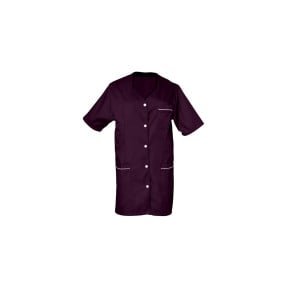
The tunic, with a modern and pleasant cut, is a fitted garment that helps avoid irritation caused by friction. It also offers good freedom of movement which will allow you to feel comfortable throughout the day.
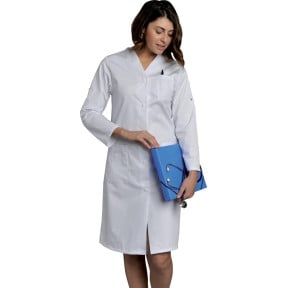
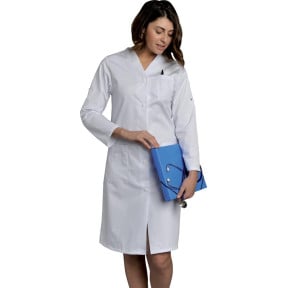
The coat plays a protective role, it's a barrier between the patient and you. It also allows excellent freedom of movement for greater dexterity and precision in your daily gestures. Its loose cut falls at hip level for increased protection when you pair it with pants.
Whether buying a tunic or a coat, several important criteria must be taken into account.
The pockets : They have a very important function, as they allow you to have maximum accessibility to your accessories. This can include phones, notebooks and pens which are small daily tools that enable you to perform quality work. Some pockets can be buttoned, snap-fastened, zipped or even velcro.
The closure : You have several types of closures available, depending on your choice of tunic or coat. Most of the time, coats use snap fasteners to prioritize speed and simplicity, but they can easily come undone. The button closure is known for its effectiveness but requires a bit more time to close.
The collar : There are many types of collars, round, V-neck, tailored, shirt-style, etc. The choice will rest exclusively on your personal preferences.
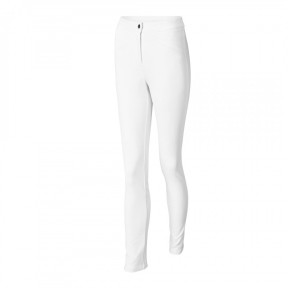
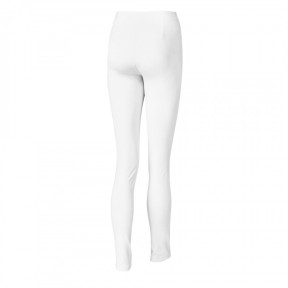
The pants are generally designed with similar characteristics. The main difference lies in the cut, which allows offering garments adapted to all body types. Generally, the bottoms are designed with an elastic waistband for better support. The André pants from SNV will perfectly meet your needs with its poly-cotton material.
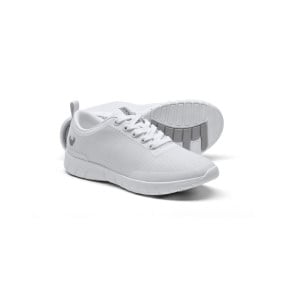
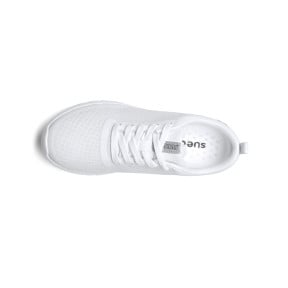
Shoes are a key piece of equipment, as medical professions require maintaining a standing posture for extended periods.
The shoes must absolutely meet safety standards. The EN ISO 20347 standards, concern work shoes with the characteristics of being slip-resistant, antistatic, having a closed heel, shock absorption and an anti-puncture sole. Compliance with this standard guarantees you can work safely.

The color of your outfit can be either a free choice or imposed by your employer. Generally, white coats are the most commonly used in the medical field. It is recommended to wear pale colors, relaxing tones.
However, if your facility has imposed a color on you, it can be different depending on the department where you are assigned. For example, some coats or tunics are white, but can have colored piping to differentiate your role in the facility.
Generally outfits for room visits are white. Surgeons, anesthesiologists, etc. are mainly dressed in a green or blue ensemble.
The tunic is often used for work requiring great freedom of movement. You can wear it if you work in rehabilitation, physiotherapy, aesthetics or even dentistry. In this case, the tunic is often worn over your everyday clothes.
The coat on the other hand, is designed so that it can be removed without any risk of contamination. It is dedicated to people working in laboratories, doctors as well as nurses. Regarding surgeons and specialists in operating rooms, they are equipped with sterile garments for single use.
The tunics, coats and pants very often have similar fabric mainly made of cotton or poly-cotton. These fabrics have the advantage of being both lightweight, soft as well as durable to keep your clothes for the long term.

Maintaining your outfit is very important, which is why your clothes must be adapted to daily washing to preserve impeccable cleanliness. In some cases, your outfit can be directly maintained by your facility. In this case, opt for a complete outfit that can withstand industrial washing. For this, you will need to choose clothes that meet the EN 15797 standard.
To simplify your tasks in your field of activity, here are some essential accessories. We suggest having masks as well as a bottle of hand sanitizer in your pockets to ensure additional hygiene.