The best equipment for pros and enthusiasts alike



-15%
 Professions
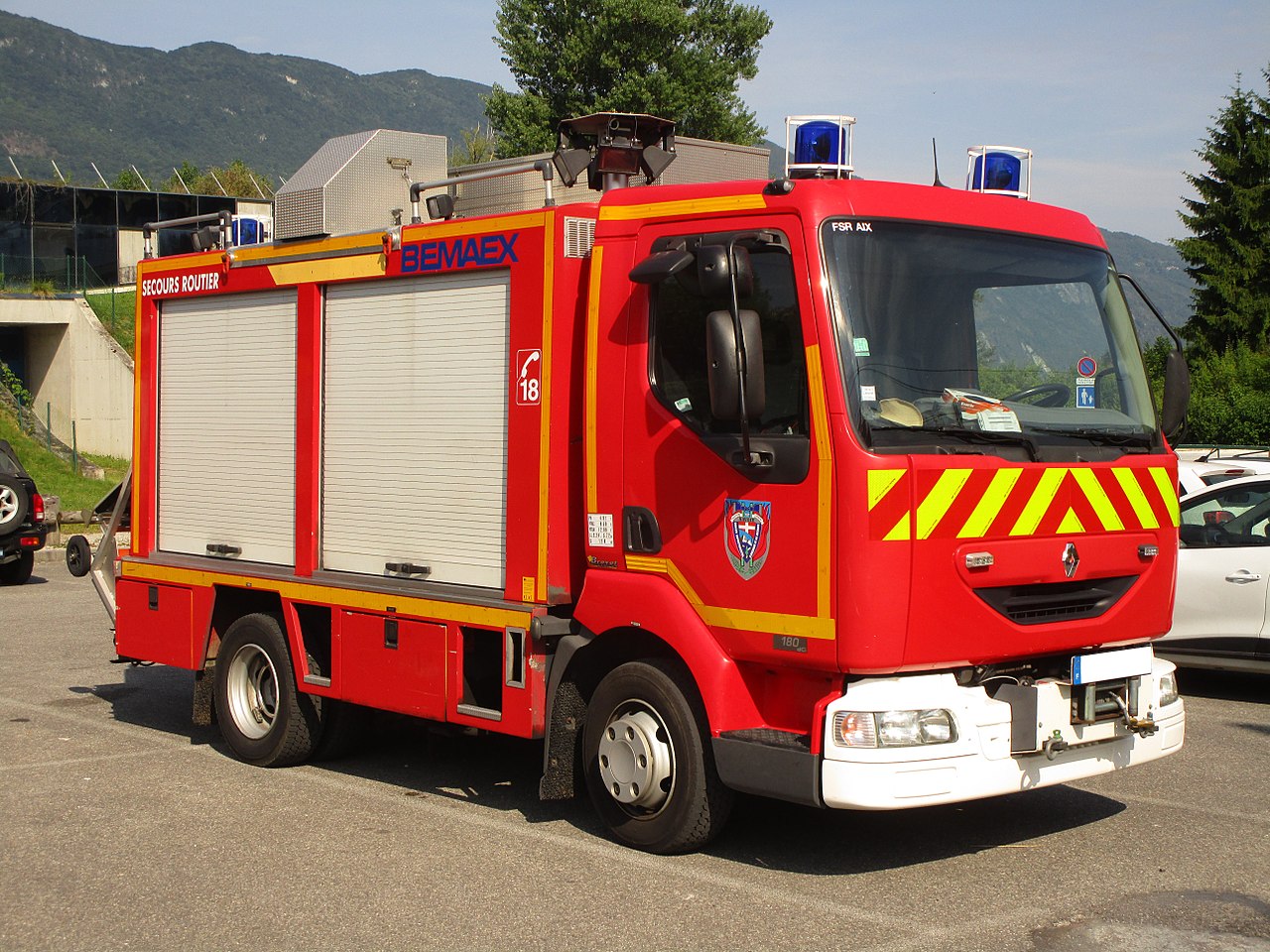
The VSR responds to traffic accidents. Its purpose is to secure the incident site, protect against fires, and extricate victims. It is equipped with three seats.
This vehicle has numerous equipment that serves different functions:
- Marking and lighting using a warning cone, gyromat, luminous panels and spotlights;
- Fire protection through hoses and extinguishers;
- Vehicle blocking and lifting particularly with air cushions, wedges, hydraulic jack, timber supports, jacks, etc.;
- Extrication with spreaders and cutters.
The VSR is equipped with a generator that delivers the hydraulic power necessary for cutting tools.
Some road rescue vehicles, the rail/road VSR, are adapted to intervene on railway tracks, particularly in tunnels, where intervention conditions are more delicate.
Traffic accidents account for 6% of interventions.

The VSAV intervenes to provide emergency assistance to people. It has three seats plus an additional one in the back for a SAMU doctor or health service, in addition to the victim lying on the stretcher. It allows transporting victims to the hospital while providing first aid during transport. Additionally, it is equipped with storage allowing the storage of:
- immobilization equipment
- lifting equipment
- medical kits: infusion, CPR (cardiopulmonary arrest), childbirth, etc.
83.5% of interventions by firefighters concern emergency assistance to people, representing 4.1 million of the 4.9 million interventions carried out in 2019.
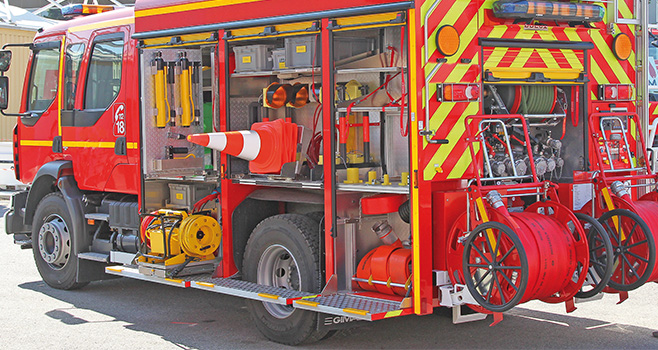
The FPT responds to urban fires and can be used by 8 firefighters. The rear section provides access to the pump, the LDT (rotating reel hose), and the 1/2 supply connections (lower section) and discharge (upper section) with red quarter-turn valves (it happens more rarely that quarter-turn valve handles are blue for water and yellow for wetting/foaming agents). The tank can hold up to 6000 liters of water. Water supply is done through fire hydrant, by a water-carrying vehicle or by pumping from a source such as a lake, river or pond.
The rear part of the truck consists of a cabin where firefighters can quickly equip themselves with self-contained breathing apparatus during transport.
Two mobile reel unwinders, which allow unrolling the hoses of fire hoses, are suspended at the rear of the FPT.
The vehicle is also equipped with material in its side compartments: hoses, pipes, fittings, divisions, emulsifiers...
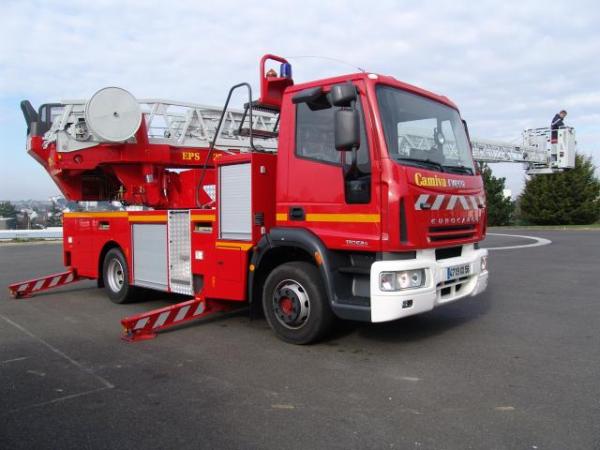
The EPA responds to high-altitude fires thanks to its telescopic ladder of 18, 24, 30 or 32 meters long equipped with a basket or platform (not systematic) or an intercom allowing communication with ground crew members. The EPA stabilizes on the ground using its 4 stabilizing jacks allowing to widen the support polygon, all while lifting the vehicle's wheels, which allows the ladder to be used.
It is used in a large number of missions such as fire attacks, rescuing people trapped at height, or for transporting equipment or personnel.
The ladder can pivot, allowing it to reach different areas without moving the vehicle.
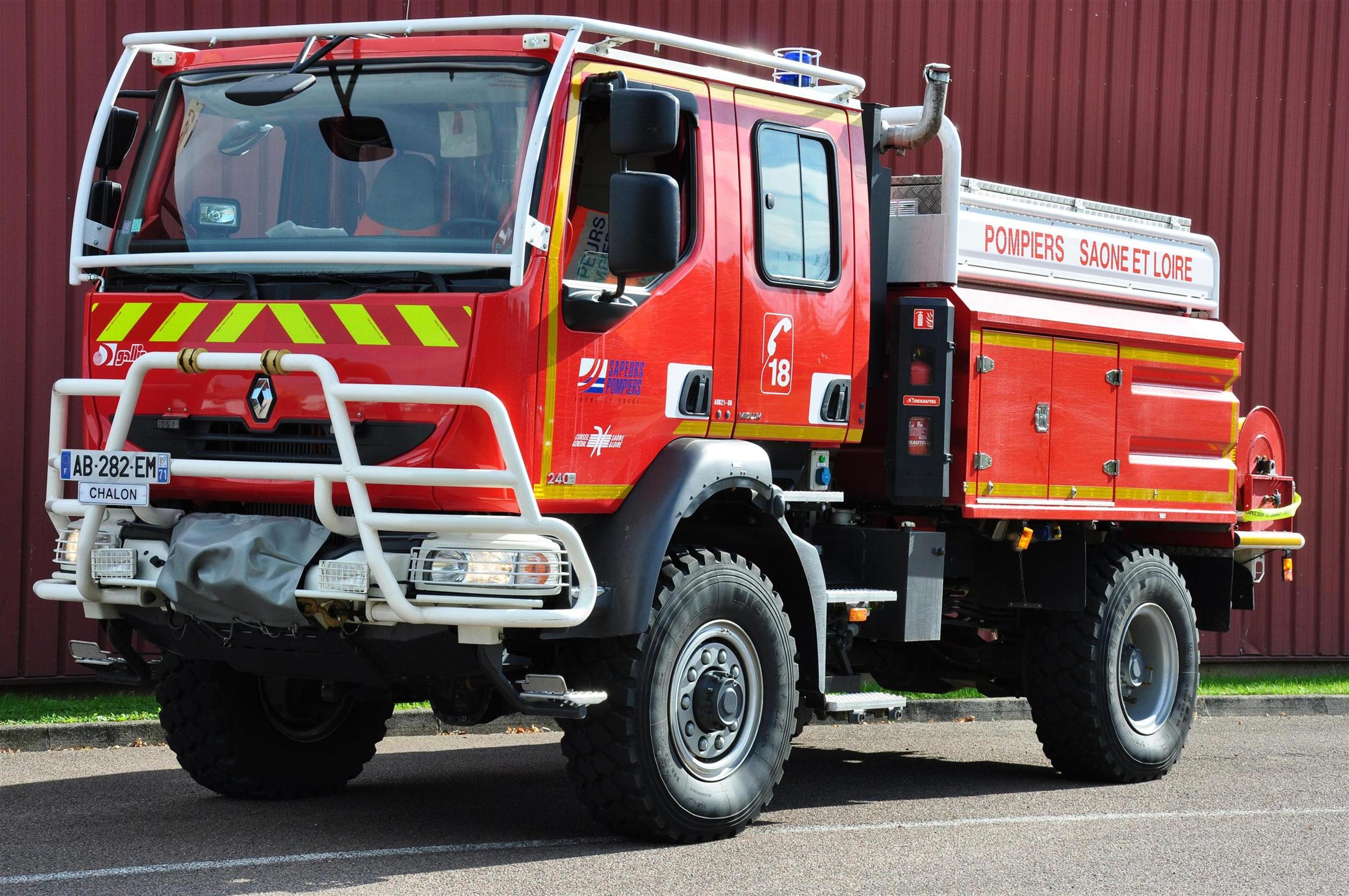
The CCF is used for forest fire suppression missions. It contains between 2000 and 13000 liters of water. It is equipped with a 4x4 chassis to allow it to move easily in forests, but it has a large size that can pose problems in certain situations. It can be refilled by pumping from any water source and is operated by 4 firefighters, mainly two crew members, one driver and one crew chief. Everything depends on the SDIS and their intervention doctrines. For example, in Gironde, a forest fire unit corresponds to three trucks: a VLHR (Light Off-Road Vehicle), a crew chief and two CCFs operated by a driver and a crew member in each vehicle.
Finally, if you are a fire truck enthusiast, you can always find Sluban products with their miniature representations.
On vetsecurite.com, find thousands of items for fire safety agents as well as firefighters: clothing, shoes, equipment, materials, luggage as well as a women's range.