 The best equipment for pros and enthusiasts alike



-
 Professions
-
-
-
-
-
-
-
-
All Tops
![All Tops]()
-
-
-
All Bottoms
![All Bottoms]()
-
-
-
All Footwear
![All Footwear]()
-
-
-
All Bags
![All Bags]()
-
-
-
All Accessories
![All Accessories]()
-
-

It is essential to be well-equipped against rain, especially if you are exposed to showers for long periods. In the range of clothing that can protect you, the choice extends from water-repellent jackets suitable for light rain, to complete waterproof equipment for more intense episodes. Let's review to better understand.
Table of Contents:
Water-repellent and waterproof clothing
Water resistance can be classified into two main categories that determine how well a garment can be adapted to withstand water assault.
A water-repellent fabric allows water to slide off the garment to limit its penetration. Most water-repellent garments acquire this property through a coating treatment on top of the fabric. While water flows off the fabric, this solution is however not suitable for severe weather and high volume. A water-repellent jacket or pants can thus protect against light rain and showers.
A waterproof fabric fights more effectively against water penetration. The garment must protect against water penetration and must also be equipped with waterproof elements (heat-sealed seams, waterproof zippers) to certify waterproofing. Better able to protect against heavy rain, the waterproof garment can be combined with a water-repellent treatment for a more complete solution.
In both cases, water resistance capabilities deteriorate over time and repeated exposure, and therefore offer reduced protection over usage. With careful maintenance and the possibility of retreating the garment with a waterproofing product, you can extend the properties of your garment.

The EN 343 standard
This standard for work clothing governs and classifies water resistance performance. A product meeting this nomenclature presents two markings to determine its strengths:
- The resistance to water penetration, classified from 1 to 3 (3 being the highest performance level). It indicates the garment's waterproofing capabilities and its robustness against pressure exerted by falling water.
- The evaporative resistance also classified from 1 to 3. It shows the resistance to water vapor and determines the breathability of the fabric. A highly breathable garment will therefore have a high class to show that it can effectively evacuate perspiration. An important factor to consider to avoid accumulating sweat and risking rapid cooling of the body.
Types of rain gear
As we have seen, depending on the intensity of the rain, it will be necessary to opt for different types of clothing. We can present some examples capable of protecting you from bad weather.
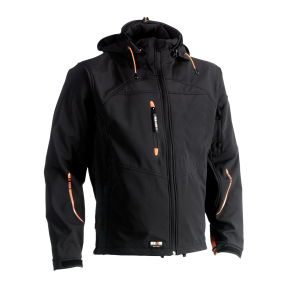
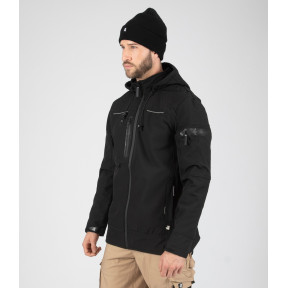
A widespread windproof and water-repellent protection is the Softshell jacket. It is equipped with three distinct layers each having their protective role. The outer layer is water-repellent to protect against light rain. The second is a breathable membrane to evacuate perspiration and regulate internal temperature. Finally, the inner layer of fleece type offers the possibility to keep the body warm and makes the garment comfortable.
Although warm and windproof, a Softshell will not be sufficient in case of heavy rain or snow. It will be necessary to resort to a waterproof solution such as a Hardshell like a parka. Of similar design to the Softshell, it will however be the outer layer that will act as a barrier against severe weather.
In addition to jackets, coats and parkas, pants can also have the characteristics required by the EN 343 standard.
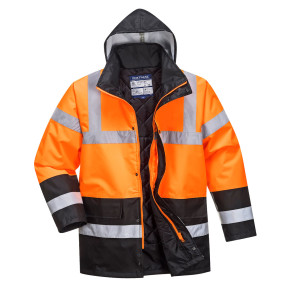
In case of heavy rain, visibility can be greatly reduced (especially at night), a high-visibility waterproof garment will therefore be an essential ally for your protection and safety.
For enhanced and complete protection, it is advisable to equip yourself with accessories to fight more ardently against bad weather. Cold-resistant gloves meeting EN 511 standard may have waterproof characteristics that are more or less high depending on the model. Work shoes, protective and safety shoes (classified respectively under standards EN ISO 20347, 20346, 20345) may possess, according to their class, water-repellent capabilities catalogued under the symbols WRU and WR. The first defines a water-resistant shoe upper, while the second corresponds to protection over the entire shoe.
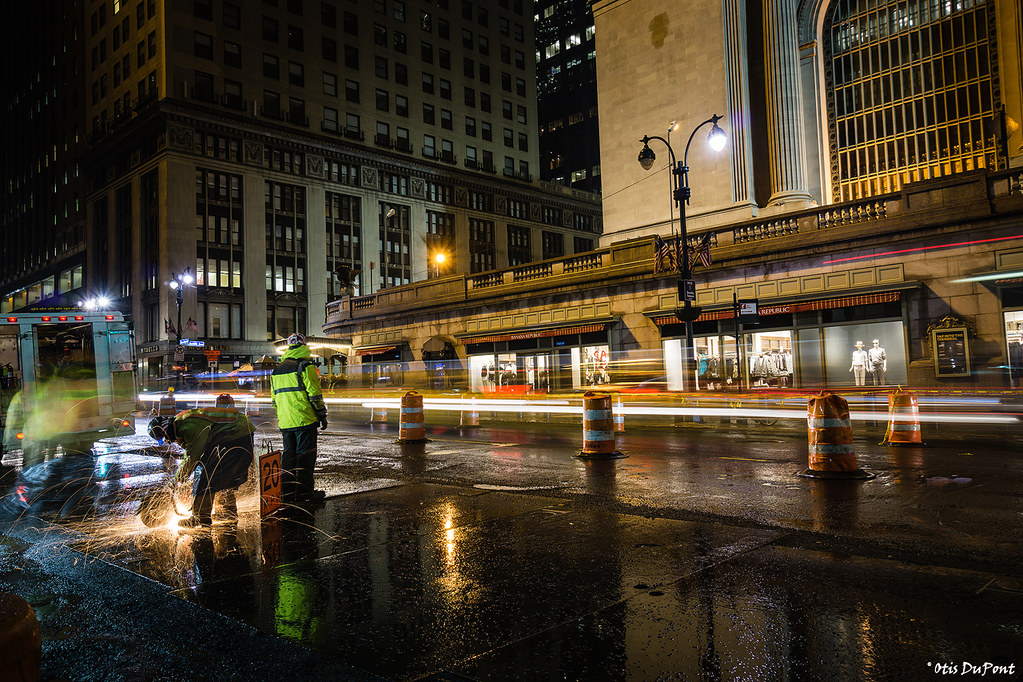
If your profession requires you to do outdoor work, you therefore have a wide choice of equipment that will allow you to adapt to difficult conditions. Define your needs well to find the gear that will ideally accompany you in the field.
Related products
-30%
Related articles


-
![Over 200 brands At the best price]() Over 200 brands At the best price
Over 200 brands At the best price -
![Secure payment In 3 or 4 interest-free installments]() Secure payment In 3 or 4 interest-free installments
Secure payment In 3 or 4 interest-free installments -
![Delivery across Europe As soon as possible]() Delivery across Europe As soon as possible
Delivery across Europe As soon as possible -
![Customer service Monday to Friday]() Customer service Monday to Friday
Customer service Monday to Friday


