The best equipment for pros and enthusiasts alike




-15%
 Professions
Fire is defined by the production of flames, light and heat that comes, or not, from combustion.
Its formation is based on the fundamental rule of the fire triangle. The latter consists of an oxidizer, a fuel and heat. The presence of these three elements causes the production of flames. If you wish to interrupt this process, it is necessary to make one of these three substances disappear
Summary:
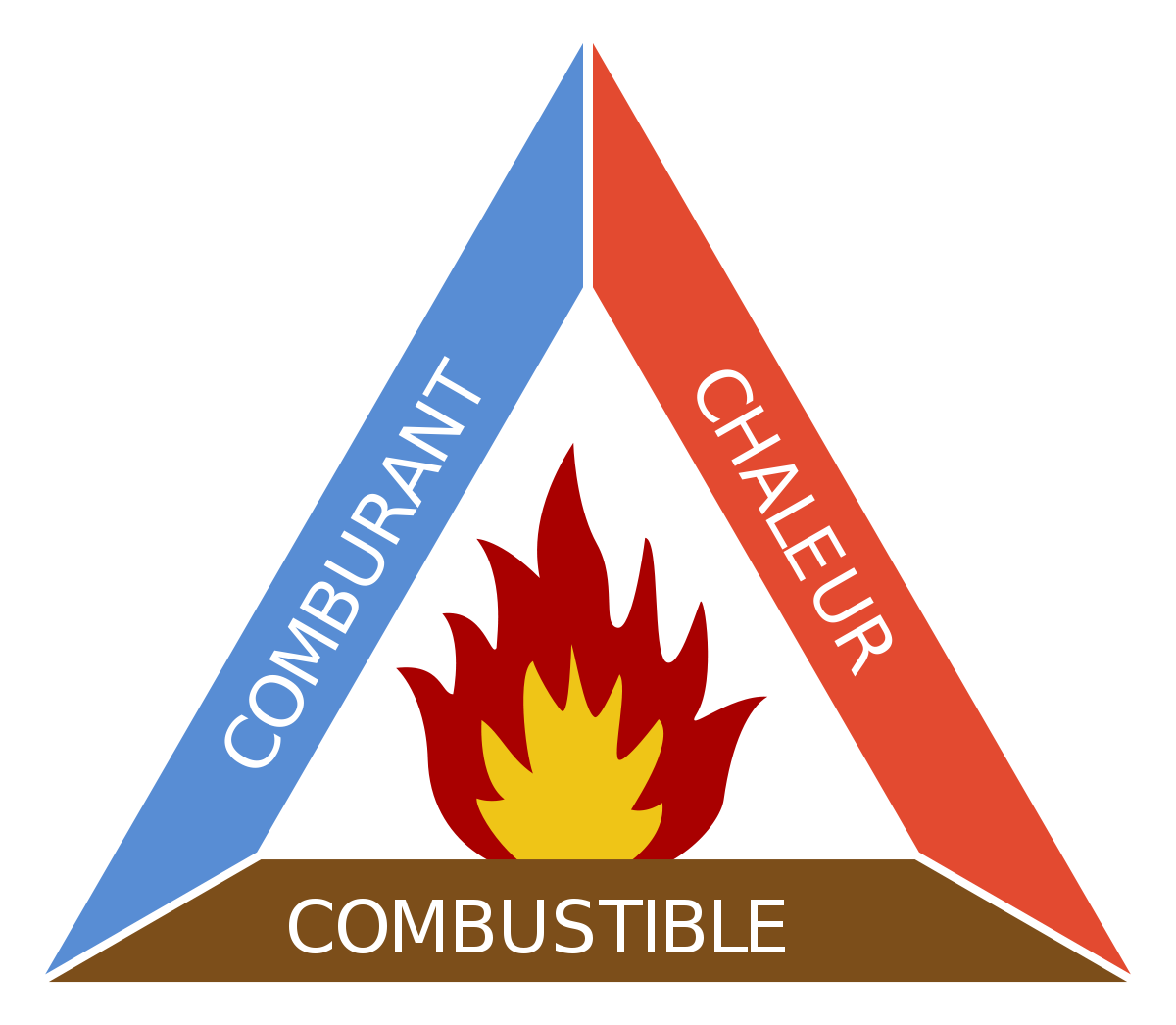
Each side of the fire triangle symbolizes one of the essential components for the existence of fire:
- The oxidizer : Oxygen is the most common oxidizer. We find it among others in the air we breathe. There are also other oxidizers, such as ozone or nitric acid for example.
- Heat : It is a form of energy that consists of a temperature rise such as a lighter flame, the use of cooking plates or even prolonged use of electronic devices.
- Fuels : Wood, gasoline, paper, cardboard, plastic objects and fabrics are examples of fuels that are likely to fuel a fire.
In the case of fires in enclosed spaces, the critical point is characterized by the transition to generalized combustion of all materials present in the room. The gases from pyrolysis occupy the entire room and suddenly ignite (as a reminder, pyrolysis is a chemical decomposition of a substance obtained by intense heating in the absence of oxygen). This phenomenon is called flashover and corresponds to a situation where the fire becomes critical and the building becomes very vulnerable, resulting in a massive ejection of heat and smoke.
There are two other major problems than fire during a fire: heat and smoke.
Fires cause between 600 and 700 deaths per year. Their effects on the human body are known. The values to consider are temperature as well as the thermal flux received by the skin. The body can withstand up to 60°C and fluxes of 2.5 kW/m2. A room caught in flames reaches 600°C in just five minutes.
Smoke causes a loss of visibility that disorients people and prevents them from identifying evacuation routes. Moreover, it contains certain harmful gases that can, during prolonged inhalation, cause death:
- Carbon monoxide is a toxic gas, invisible, odorless and non-irritating, present in all fires, which can be fatal in less than five minutes if present at least 1% in the air.
- Hydrogen cyanide is a toxic gas that can cause anoxia, which corresponds to too low oxygen content.
- Nitrogen oxide is a gas that causes breathing difficulties or bronchial hyperreactivity in sensitive people.
In the majority of cases, victims die from asphyxiation caused by smoke rather than being burned by flames.
All techniques that can neutralize a fire are based on removing one of the components of the fire triangle. When they intervene, firefighters must be as efficient as possible. The one who operates the nozzle must adapt the jet, according to the evolution of the incident. The vehicle driver must, for his part, operate the pump to compensate for pressure losses, that is to say less pressure due to water friction in the hose and gravity.
There are several ways to neutralize a fire source, depending on the situation:
- The straight jet penetrates the fire source thanks to the force of the jet in order to cool a very specific location.
- The diffused jet, with a valve opening of about 40°, allows neutralizing the risks of flashover mainly present in buildings. It forces firefighters to attack smoke before flames. The diffused jet allows cooling the gas and extinguishing small fires.
- The protective diffused jet, with a 180° opening. It is used to protect professionals present on the front line.
- Water mist extinction, it guarantees a very large exchange surface and a reduction in water consumption. Its purpose is to slow the spread of fire as well as cool the surrounding air.
- The foam jet, used for grease fires and cooking auxiliaries. It smothers the fire by depriving it of oxygen and is mainly used for household fires.
- Reduce the proportion of oxygen by projecting inert gases, such as nitrogen for example.
- Powder extinguishers, they use a process that absorbs heat from the flame and decreases oxygen concentration.
All fires generally cause significant damage, but they are not all considered in the same way. Here are the different fire classes, their fuels as well as their characteristics:

Fires have devastating effects on human life, but also on material goods. Among the most striking:
- Notre-Dame Cathedral in Paris on April 15, 2019.
- The La Fenice theater, in Venice, in 1996.
The best way to protect against fire is to prevent any fire from starting, but also to know what behavior to adopt when facing these risks.
The main techniques are:
- Alert emergency services and occupants of the house or building.
- Try to extinguish the flames with the means at your disposal. Smother the flames with a towel, blanket or by any means possible.
- Evacuate the house and go to a safe place. Stay as close to the ground as possible to avoid smoke as much as possible.
- Touch a door before trying to open it, fire may be behind it. Do not brave the smoke, in a stairwell for example.
On vetsecurite.com, find thousands of items for fire safety agents as well as firefighters: clothing, shoes, equipment, materials, luggage as well as a women's range.