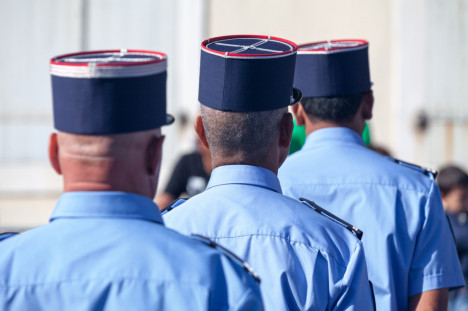
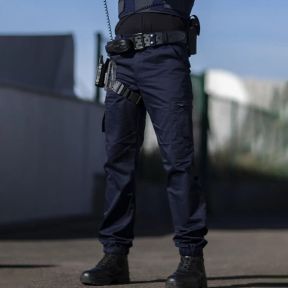
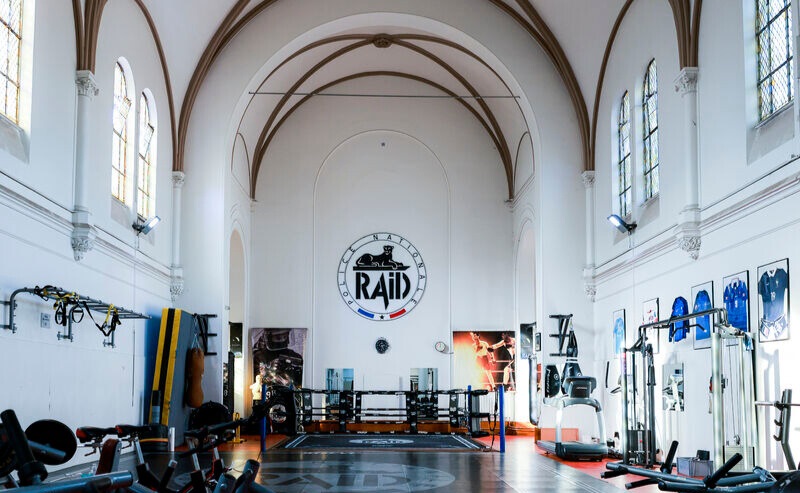
RAID is one of the elite units of the French National Police. It was founded in October 1985 under the Ministry of Interior of Pierre Joxe and at the request of the police community to fight against major crime and terrorism. The central unit of RAID is located in Bièvres, in Essonne. Renowned for its high-intensity interventions, this unit is distinguished by its expertise during hostage situations, counter-terrorism, and protection of dignitaries. Composed of rigorously selected and trained police officers, RAID plays an essential role in public security, ensuring varied missions with remarkable efficiency thanks to its cutting-edge equipment and technologies.
Summary:
RAID: Origins and Missions
History of RAID
Creation and evolution
RAID today, which stands for "Research, Assistance, Intervention, Deterrence", was initially named in reference to the term "raid", evoking a military assault. Operating throughout the national territory, RAID specializes in fighting major crime, terrorism, hostage situations, and all forms of criminality.
In 2010, the Intervention Forces Coordination Unit (UCOFI) was established to coordinate RAID and GIGN actions, facilitating their cooperation through joint intervention exercises. In March 2015, the seven National Police Intervention Groups (GIPN) in mainland France – Bordeaux, Lille, Lyon, Marseille, Nice, Rennes and Strasbourg – were integrated into RAID, becoming its territorial branches. This integration increased RAID's workforce from 80 to approximately 500 agents.
Each branch intervenes according to its geographical sector, but the Absolute Emergency Procedure (PUA), established in April 2016, allows all units to act throughout the territory in case of major crisis, upon decision of the Minister of Interior in response to terrorist threats.
In April 2016, new branches are created in Montpellier and Toulouse, then in Nancy in 2017. Finally, from 2018 to 2019, the GIPN of Nouméa (New Caledonia), Pointe-à-Pitre (Guadeloupe) and Saint-Denis (Réunion) are progressively transformed into RAID branches, thus ensuring national coverage, including overseas territories.
Notable interventions
RAID interventions are often covered by the media due to their importance and danger. Among the most notable operations are:
- Hostage situation at the Nantes courthouse (1985): RAID's first intervention took place on December 19, 1985, during a hostage situation at the Nantes courthouse. Two men, Georges Courtois and Patrick Thiolet, were appearing for armed robbery. During the hearing, a third accomplice, present in the courtroom, took the assembly hostage, armed with a grenade and a pistol. RAID intervened, negotiations lasted 34 hours, and the criminals were arrested without causing injuries.
- Arrest of Action Directe members (1987): In February 1987, RAID was mobilized to arrest four members of the far-left group Action Directe, entrenched in a farm near Orléans. After several days of discreet surveillance, 28 RAID officers conducted the assault, capturing the suspects and seizing weapons and explosives. Between 1979 and 1987, its members claimed responsibility for more than 80 attacks and assassinations in France.
- Hostage situation at Neuilly-sur-Seine nursery school (1993): In May 1993, a man who called himself "Human Bomb" took hostage a class of 21 children and their teacher in a nursery school in Neuilly-sur-Seine, equipped with an explosive belt. He demanded a ransom of 100 million francs to release the hostages. After 46 hours of negotiations, RAID intervened and neutralized the man while he was sleeping, saving all the children as well as the teacher.
- Confrontation with the Roubaix gang (1996): In March 1996, RAID intervened to arrest members of the Roubaix gang, criminals linked to Al-Qaeda, involved in a series of violent robberies intended to finance jihad through an international network orchestrated by terrorist Fateh Kamel from Montreal. The assault was marked by an exchange of fire with the terrorists, during which two police officers were seriously wounded. The suspects were finally neutralized.
- Arrest of Yvan Colonna (2003): In July 2003, RAID, led by divisional commissioner Christian Lambert, arrests Yvan Colonna after a 1500-day flight, he had been wanted for 4 years. He is suspected of assassinating prefect Claude Érignac on February 6, 1998 in Ajaccio. The intervention takes place in Corsica, in a sheepfold where Colonna had taken refuge.
- Assault against Mohammed Merah (2012): In March 2012, RAID chief Amaury de Hauteclocque led the assault against Mohammed Merah, responsible for the death of 3 soldiers and a shooting that killed 4 people in front of the Jewish school Ozar Hatorah. He had barricaded himself in his Toulouse apartment after a series of attacks. After 30 hours of siege, Merah was killed during the operation.
- Hyper Cacher Intervention (2015): In January 2015, RAID and BRI intervene together to free the hostages held in the Hyper Cacher at Porte de Vincennes by an Islamic terrorist. Amedy Coulibaly, responsible for the death of 4 people and taking 16 hostages, demands the release of the Kouachi brothers. The assault ends with the elimination of the hostage-taker.
- Intervention at Alençon-Condé penitentiary center (2019): In 2019, RAID intervenes at the Alençon-Condé penitentiary center after Michaël Chiolo, a radicalized inmate and his wife attacked guards, the attack also targeted the prison director as well as members of the sentence commission. The attack killed 3 people. The assault concluded after 10 hours of entrenchment with the subduing of the inmate, while his wife, seriously injured, succumbed to her injuries at the hospital.
- Intervention at La Grande-Motte (2024): On August 24, RAID jointly with the Montpellier BRI intervened to arrest the suspect in the La Grande-Motte synagogue arson after 15 hours of pursuit. The man armed with an axe planned to wait for the worshippers to exit. He was arrested in Nîmes. A municipal police officer was slightly injured following the explosion of the gas cylinder present near cars he had set on fire.
These operations highlight the effectiveness and bravery of RAID officers.
RAID Missions
Types of missions
RAID intervenes in critical situations that require the engagement of elite units. Its members have the skills and technical means necessary to manage the most perilous events.
Specialized in negotiation and assaults, RAID is responsible for apprehending or neutralizing dangerous individuals. It is dedicated to fighting organized crime, major banditry and terrorism.
RAID's main missions include:
- Intervene during serious or complex crises threatening public order and citizen safety, such as terrorist attacks, hostage situations, or criminal entrenchments.
- Ensure the security of high-ranking French and foreign personalities, during official ceremonies, in collaboration with the Protection Service (SDLP).
- Provide close protection to certain ambassadors stationed in high-risk countries.
- Secure major political, public, cultural, sporting events or social demonstrations, often with the support of elite marksmen.
- Provide human, logistical and strategic support to specialized police services in the fight against terrorism and organized crime.
- Train certain police officers for specific missions, in partnership with the Directorate of Resources and Skills of the National Police (DRCPN).
- Conduct technical tests in collaboration with other national police directorates, such as the DRCPN and the Central Directorate of Judicial Police (DCPJ), to improve intervention equipment and techniques.
- Participate in training foreign intervention units within the framework of international cooperation.
- Intervene to arrest individuals or groups suspected of preparing crimes or terrorist acts in France.
RAID operates primarily in urban environments, being a unit of the national police, while the national gendarmerie focuses on rural areas.
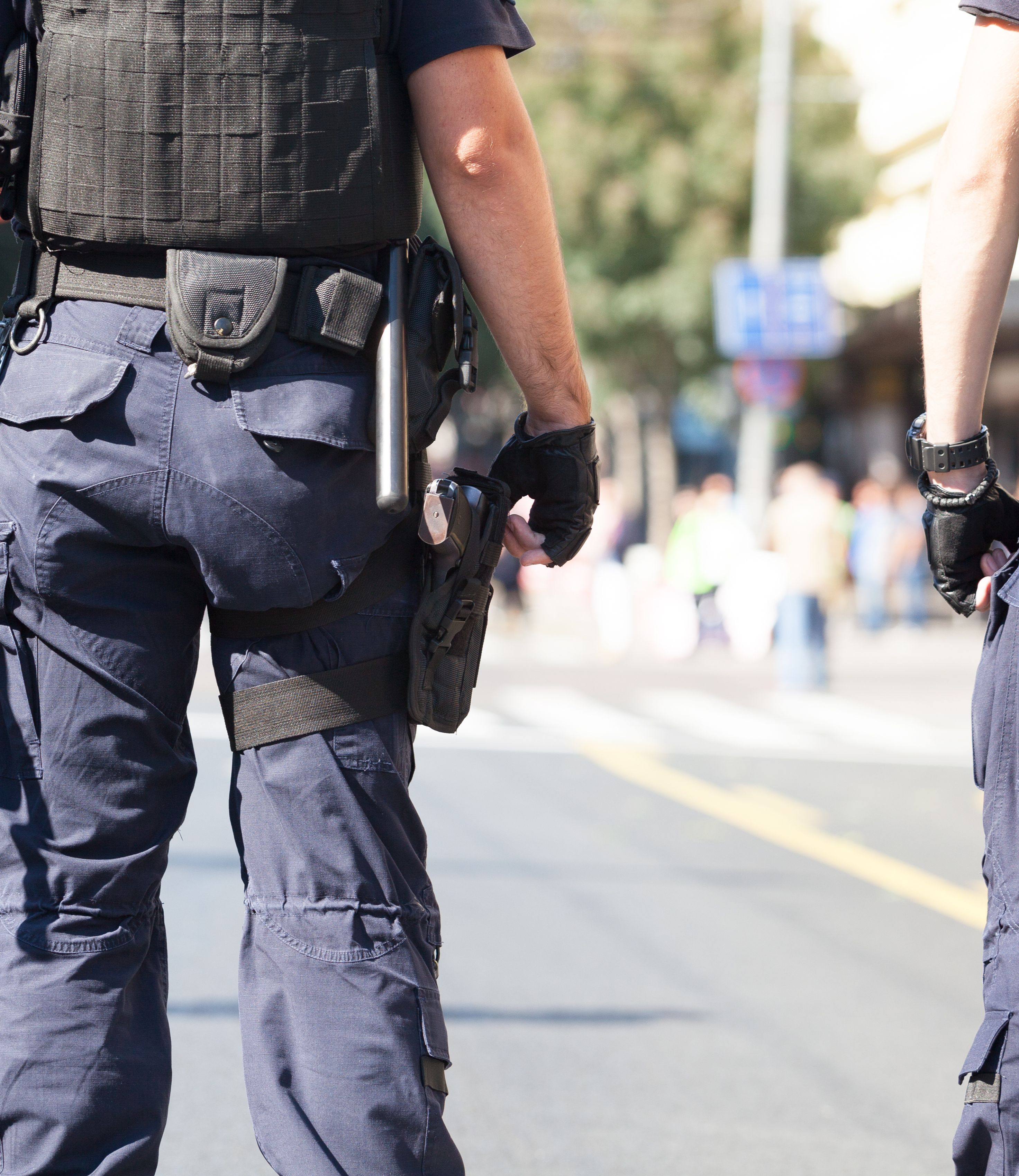
To carry out its missions, RAID relies on specialized agents in various fields, such as:
- the discreet approach,
- the canine unit (dog handlers),
- breaking and entering,
- the intervention section,
- the medical group,
- the negotiation group,
- the intervention diving group,
- the technical group,
- the rope techniques group in hazardous environments,
- high-precision shooters,
- CBRN (Chemical, Biological, Radiological, Nuclear) risk management,
- and operational parachuting.
Internal organization
Hierarchical structure
RAID is structured into several specialized sections, each with a distinct role:
- Assault Section: Armed interventions and hostage releases.
- Negotiation Section: Dialogue with hostage takers and crisis management.
- Breach Section: Forced entry into secured buildings.
- Medical Section: Emergency care and medical support in operations. (Matthieu Langlois, RAID physician wrote a book "RAID Doctor: Living in a State of Emergency" about the Bataclan events).
- Protection Section: Security of threatened personalities.
Thanks to its varied skills and cutting-edge equipment, RAID is always ready to "Serve without fail" in all situations.
https://iej.assas-universite.fr/
Recruitment and training
Selection and tests
Once or twice a year, notifications are sent to police stations to inform officers that the FIPN is recruiting new members, thus offering the opportunity to join RAID.
All police officers, whether they are peace officers, commissioned officers, or commissioners, with at least 3 years of experience in active service, can apply. Interested candidates must submit their application accompanied by a file, with support from their hierarchy and excellent evaluations.
If their file is selected, they undergo selection tests at the Saint-Malo police school. These trials, designed by the Director General of the National Police in collaboration with the RAID chief, last 10 days and change every year. They include physical, technical tests, shooting, combat, as well as physical and psychological endurance tests.
During this period, candidates are subjected to difficult conditions, including claustrophobia and vertigo tests. Those who succeed then access an eliminatory pre-training, which includes other physical, psychological, and behavioral assessments.
Candidates who successfully complete the pre-training are placed on an eligibility list valid for 2 years. They can then be assigned based on needs, with missions renewable twice upon agreement from the service chief, after consultation with an internal committee.
New RAID members undergo initial training and a 6-month probationary period, where their missions vary according to their level of authorization.
Equipment and technologies
RAID has an arsenal and cutting-edge technological equipment:
- Weapons: Submachine guns, support rifles, explosives, assault rifles, shotguns, light machine guns and precision rifles.
- Technologies: Advanced surveillance tools, sophisticated communication systems, and specialized breach devices.
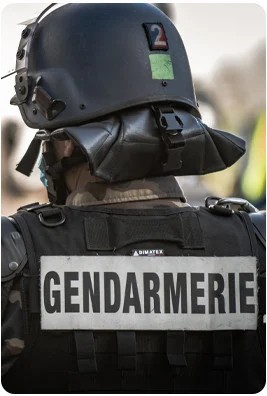
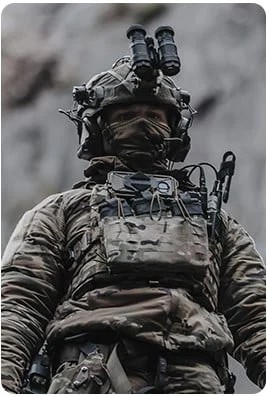
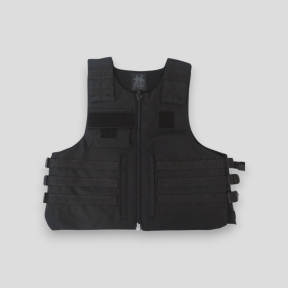
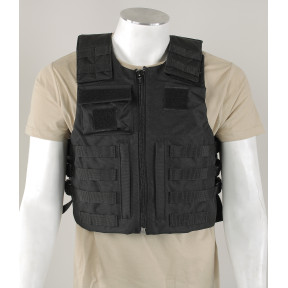
- Individual protection: Bulletproof vests, ballistic helmets, and explosion protection equipment.
In addition to this weaponry, RAID uses various vehicles adapted to specific situations, such as motorcycles, unmarked vehicles for surveillance, and armored vehicles. Since 2008, the unit has also benefited from the support of the Joint Helicopter Group (GIH), a unit of the Special Operations Command (COS) created in 2006 to assist GIGN.
RAID and BRI
RAID (Research, Assistance, Intervention, Deterrence) and BRI (Research and Intervention Brigade) are two elite units of the French police, but they have different missions and areas of intervention.
RAID (Research, Assistance, Intervention, Deterrence)
- Main mission: RAID is a national unit of the national police specialized in managing serious crises. This includes hostage situations, arrests of particularly dangerous criminals, counter-terrorism, and other large-scale situations requiring specialized intervention.
- Scope: RAID intervenes throughout French territory and can also be mobilized internationally if necessary. It also coordinates regional intervention groups (GIPN) that are scattered across France.
- Expertise: RAID members are trained for extremely varied missions, ranging from crisis negotiation to armed tactical intervention, including bomb disposal and protection of dignitaries.
BRI (Search and Intervention Brigade)
- Main mission: The BRI, often called "Anti-gang Brigade", is an elite unit specialized in fighting major banditry, organized crime, and terrorism. It is particularly known for its investigation work and operations to apprehend violent criminals.
- Scope: BRI is primarily active in Paris (BRI-PP for Paris Police Prefecture) and in major French metropolises, where it works in close collaboration with judicial police services.
- Expertise: The BRI is distinguished by its ability to conduct long-term investigations on complex criminal networks, carry out surveillance and organize arrests in flagrante delicto. It is also equipped to intervene quickly in emergency situations, such as hostage taking.
Main differences
- Role and specialization: RAID is more oriented towards managing large-scale crises and complex interventions, often with a terrorist dimension, while BRI focuses on fighting crime and judicial police operations.
- Geographic scope: RAID has a national scope and operates throughout France, while BRI is more localized, with a strong presence in Paris and major cities.
- History and culture: RAID was created in 1985 to respond to specific needs in crisis management, while BRI, founded in 1964, has a long tradition in fighting organized crime.
2024 Olympics Collaborations
To ensure the security of the Olympic Games in Paris 2024, an unprecedented collaboration between GIGN, RAID, and the BRI of the Police Prefecture (P.P.) was established. These elite units joined forces to secure the opening ceremony as well as all the events. Their coordination enabled the deployment of a rapid and appropriate response to all situations, thus guaranteeing the protection of athletes, spectators, and dignitaries present at this international event.
 The best equipment for pros and enthusiasts alike



 Professions