The best equipment for pros and enthusiasts alike










 Professions
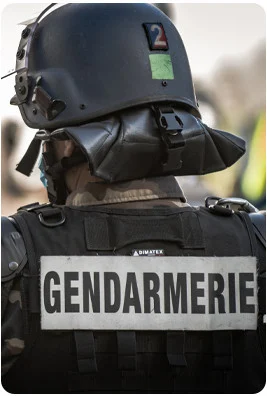
If you find yourself near a gendarmerie on November 26th, you may have the chance to witness the tribute paid to Saint Genevieve.
Summary:
Born in Nanterre around 420 AD and died in Paris around 510 AD (sources vary), Genevieve was the daughter of well-to-do Christian farmers. Blessed by Saint Germain of Auxerre when she was just 7 years old, she chose to dedicate herself to God and received the veil of virgins at the age of 15. She moved to the Île de la Cité in 440 following the death of her parents, whose inheritance she dedicated to helping those in need.
Genevieve was only 28 years old during the siege of Lutetia in 451. Yet, it was she who urged the frightened inhabitants who had rushed to the port to flee, to resist the Huns who had just crossed the Rhine and to protect their city. During this historical episode, she spoke these now famous words: "Let the men flee, if they want, if they are no longer capable of fighting. We women, we will pray to God so much that He will hear our supplications." The city was saved from Attila, the "Scourge of God," unlike Cologne which was destroyed and Metz, Verdun, Laon, St-Quentin, and Reims which were ravaged by flames. In 470, she once again saved the capital, besieged by Clovis, from famine through her determination, persuasion, and diplomacy. The famous king eventually yielded. She has since been considered the protector of the Frankish kingdom.
She is credited with many other miracles. This is why, by decree of May 18, 1962, Genevieve was designated by Pope John XXIII, at the request of the Bishop of the Armed Forces and Father Wagner, National Chaplain, patron saint of the Gendarmerie, the very recent ambassador of the Holy See in Paris. Courageous and strong, she was able to restore peace and, as such, is a model for all gendarmes in their duties. She is responsible for protecting them and praying for them. She is also the patron saint of the city of Paris and the diocese of Nanterre.
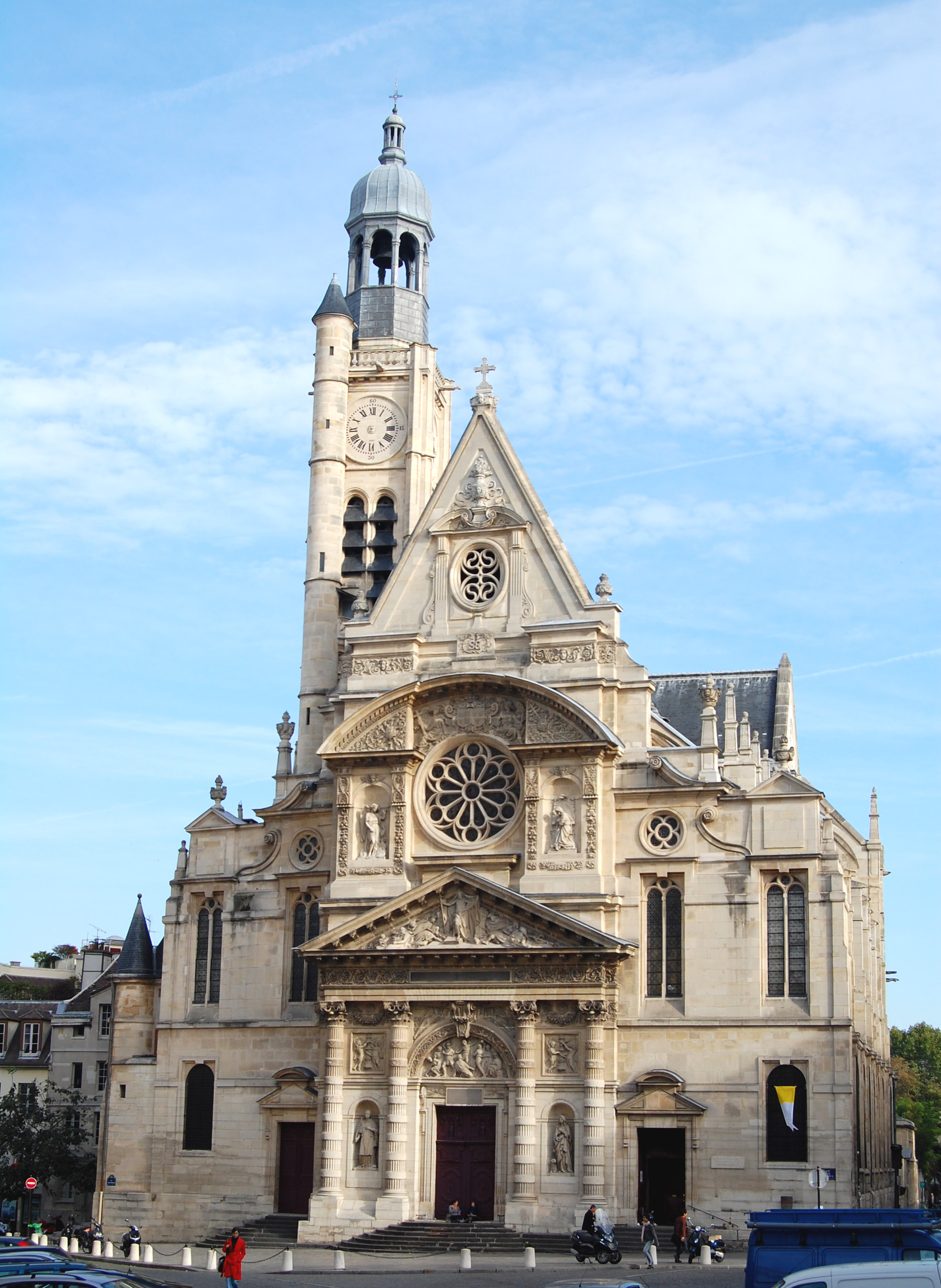
She was buried at Saint-Etienne-du-Mont, near the Pantheon, and in 1945, Anna Quinquaud erected a statue of her, now preserved at the General Directorate of the National Gendarmerie, located in Issy-les-Moulineaux.
In the Christian calendar, Saint Genevieve appears on January 3rd, the date of her death and consequently of her birth into heaven.
However, the gendarmes pay tribute to her on November 26th as Saint Genevieve of the Burning Ones. This date was instituted by Pope Innocent II for the diocese of Paris. It honors the healing miracles from ergot poisoning that occurred in 1130, called the "Miracle of the Burning Ones." The reliquary containing Genevieve's remains (the shrine) was then transported to the forecourt of Notre-Dame. 103 sick people were presented to her and only 3 skeptics were not healed. The history of Gendarmerie units being intimately linked to that of the capital, this choice seemed perfectly appropriate.
She is celebrated indiscriminately in all countries where gendarmes are stationed as well as within gendarmerie schools, companies, squadrons, the Republican Guard, groupings, regional legions, and the General Directorate of the Gendarmerie. All have the duty to cultivate the faith, courage, humility, and availability to others of this woman who was able to restore order and peace at key moments in the history of Paris.
Most often, the celebration consists of a mass, a color ceremony followed by a reception or friendly gathering and sometimes even a meal. Families, friends, and retired gendarmes are invited. The general staff of the Republican Guard, with the authorization of the priest of Saint Etienne du Mont, celebrates mass in the presence of the reliquary in the Church of Saint-Paul-Saint-Louis. The prayer of the Christian gendarme is addressed to Saint Genevieve during the religious service.
The purpose of this celebration is to gather and strengthen bonds within the community of gendarmes. It is an opportunity to bring together civil and military authorities, all ranks mixed, in simplicity and friendship and to "salute the commitment of those who, under the uniform of the National Gendarmerie, work daily for the protection and defense of citizens."

There is no doubt that the prayers of Saint Genevieve will continue to accompany our courageous peacekeepers for a long time to come.