 The best equipment for pros and enthusiasts alike


-
 Professions
-
-
-
-
-
-
-
-
All Tops
![All Tops]()
-
-
-
All Bottoms
![All Bottoms]()
-
-
-
All Footwear
![All Footwear]()
-
-
-
All Bags
![All Bags]()
-
-
-
All Accessories
![All Accessories]()
-
-
Airsoft is a team game where everyone has a specific role to play. To successfully complete the mission established beforehand in the scenario, each team member must show cohesion, motivation, and know how to communicate.
Summary:
Why define roles in an airsoft game?
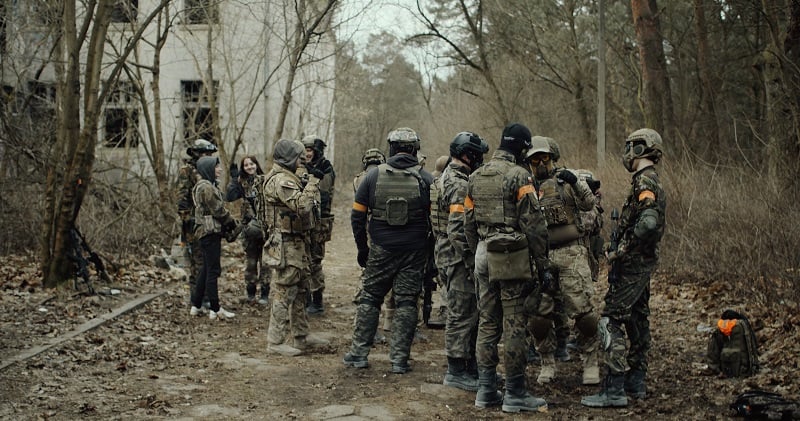
Airsoft enthusiasts are expected to play a role. However, to maintain motivation, it can be interesting to change roles during the game, or even invent new ones to add some spice to your games. You must therefore be versatile.
Roles in an airsoft team on the field
The most common roles found in many airsoft scenarios are:
-
The group leader: the person in this role must have a true leader's soul to lead their team to victory. They must know the scenario perfectly and be able to relay information about the mission to be accomplished to their teammates. A true strategist, they must know the qualities and weaknesses of each group member and make the best use of everyone's abilities. They must be able to quickly analyze the situation and terrain and make decisions accordingly. Since airsoft remains above all a leisure activity and therefore about pleasure, the leader must know how to be pedagogical while commanding respect without raising their voice at the risk of losing their group's motivation.
-
The medic: the medic is certainly the most important player on a team after the group leader. A prime target for your opponents, they can "treat" their teammates, or even themselves depending on rules established beforehand. They are so important that it may be preferable to bring the wounded directly to them to avoid exposing them. The player taking the medic role must know how to be discreet and quick.
-
The assailant: a team generally includes several attackers who are responsible for leading the assault. Depending on scenarios, they may rescue a hostage, escort a VIP, or take an enemy position.
-
The scout: Volunteer or designated, the scout goes first to conduct reconnaissance and warn in case of attack or ambush. The primary quality of a scout is discretion. If spotted, your team loses its advantage.
-
The sniper and their spotter: a dynamic duo that secures the movements of assailants. Master of camouflage, the sniper is equipped with a long replica. They must know how to be precise and patient. The spotter, as a true assistant, is traditionally equipped with an assault rifle-type replica to be able to retaliate if they are spotted by the enemy.
-
The spy: the most complex player to play, but also the most interesting. Their role is to infiltrate the enemy team to sabotage it by sending them on wrong tracks, discreetly eliminating isolated players, or providing useful information to their real team.
-
The mechanic: just like the medic who "treats" his teammates, the mechanic "repairs" the weapon replicas. This technician's interventions are often timed.
-
The support: Second-line player, they must help open breaches for players in charge of the assault. Support is equipped with heavy replicas and, unlike the sniper, precision is not their strength. Their role is to wear down the opposing team by firing into the crowd.
Other roles are obviously possible depending on scenarios, desires, or each person's skills (breacher, explosives expert, bomb disposal expert, VIP, non-player character, etc.). And since airsoft is a game, imagination is your only limit!
Off-field roles of airsoft team members
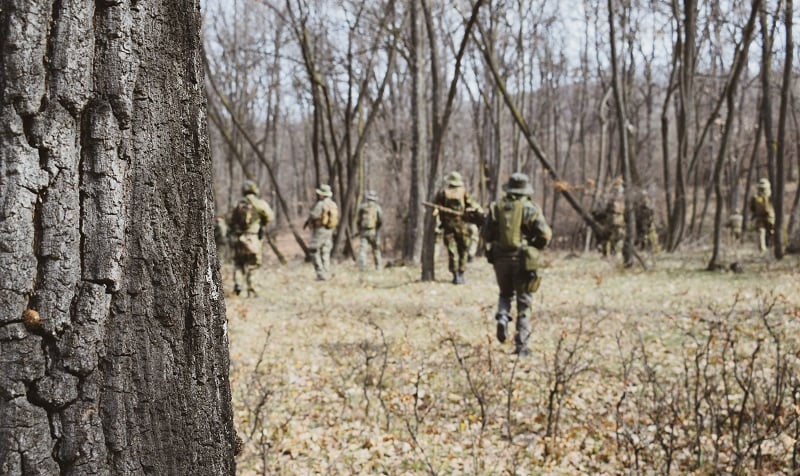
On the field as well as off the field, every member of an airsoft team is important. For a day to go smoothly, you also need people such as:
-
The cook: what would an airsoft game be without its cook or cooks. Hidden at the rear of the front, this role is nonetheless essential! It's often on them that we count to boost troop morale at the end of a game.
-
The reporter: a photographer is always useful for sharing the best shots of the day on social media.
-
The camp leader: like the group leader, the camp leader must show organization and diplomacy. Their role? Ensuring the entire day runs smoothly and that everyone, beginner and experienced alike, enjoys the day!
Related products
Related articles


-
![Over 200 brands At the best price]() Over 200 brands At the best price
Over 200 brands At the best price -
![Secure payment In 3 or 4 interest-free installments]() Secure payment In 3 or 4 interest-free installments
Secure payment In 3 or 4 interest-free installments -
![Delivery across Europe From €79 of purchase]() Delivery across Europe From €79 of purchase
Delivery across Europe From €79 of purchase -
![Customer service Monday to Friday]() Customer service Monday to Friday
Customer service Monday to Friday


